


eVTOL Training Devices: Moving from Level-Based to Capability-Based Thinking
As aircraft configurations move beyond traditional classification boundaries, the qualification logic for Flight Simulation Training Devices (FSTDs) also needs to evolve.
As global airworthiness frameworks for electric Vertical Take-Off and Landing (eVTOL) aircraft continue to develop, pilot training requirements and training device qualification standards remain important areas for further industry development. Traditional regulatory frameworks, including CCAR-60 and EASA CS-FSTD, have historically been structured around the distinction between fixed-wing aircraft and helicopters.
Fixed-wing Full Flight Simulators (FFSs) focus on training tasks such as wing-borne cruise, stall characteristics, and instrument approaches. Helicopter FSTDs, by comparison, emphasize hovering, autorotative descent, and low-level maneuvering. However, eVTOL aircraft combine multirotor vertical take-off and landing, fixed-wing cruise, and the transition between these flight modes. Their training requirements therefore extend beyond a simple combination of conventional helicopter hovering and fixed-wing cruise capabilities.
Transition-related scenarios—including acceleration and deceleration transitions, interrupted transitions, propulsion failures during transition, and flight control law switching—represent some of the most demanding training tasks for eVTOL operations. These scenarios are also among the areas that traditional qualification frameworks may not fully address.
The FSTD Capability Signature (FCS) approach introduced by EASA under the RMT.0196 regulatory initiative offers a new way to describe and assess FSTD capabilities. Rather than relying solely on fixed qualification labels such as A, B, C, or D, the framework describes a training device through a set of standardized capability features and associated fidelity levels. These may cover areas such as flight control behavior (CLO), systems and energy management (SYS), in-ground-effect and out-of-ground-effect performance (IGE/OGE), and visual systems (VIS).
This approach shifts the focus from which qualification level a device belongs to to which training capabilities it can support. Such a capability-oriented approach is particularly relevant to eVTOL aircraft, whose configurations and flight characteristics extend across traditional aircraft categories.
Transition Flight: An Area Beyond the Scope of Traditional Training Assumptions
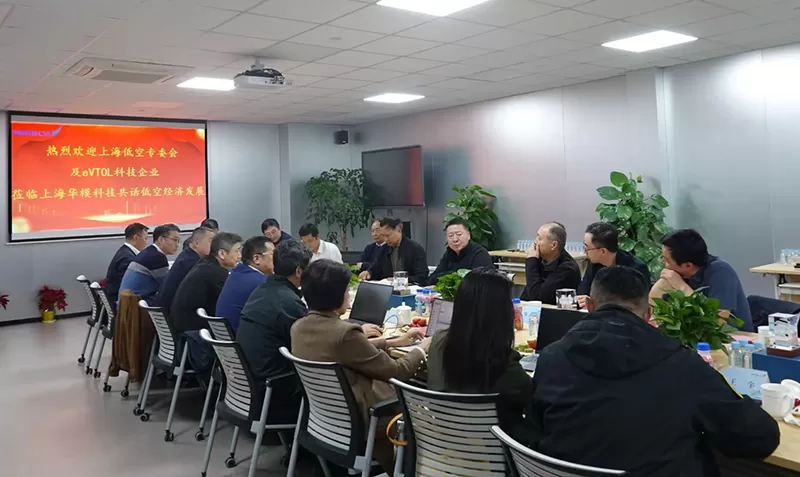
During a specialist seminar on piloted eVTOL training systems hosted by CSS, industry experts discussed how eVTOL aircraft are reshaping human-machine interaction in flight operations.
With Distributed Electric Propulsion (DEP) architectures, pilots do not directly control each individual rotor. Instead, flight operations rely heavily on flight control computers. As a result, the pilot's role is evolving from direct manipulation of individual propulsion elements toward flight monitoring, system management, decision-making, and emergency response.
This shift means that, for eVTOL training devices, the fidelity of flight control logic and dynamic system behavior may be more important than simply reproducing the external appearance of a cockpit.
Simulation projects involving international eVTOL manufacturers also illustrate this direction.
Joby and CAE have been developing two flight simulation devices for eVTOL pilot training. The first is expected to be qualified by the FAA as a Level 7 Flight Training Device (FTD), while the second is planned as a Level C Full Flight Simulator (FFS). The simulators incorporate a visual system powered by CAE's Prodigy Image Generator and Epic Games' Unreal Engine, together with audio cues, turbulence, and vibration systems. These features are designed to reproduce complex urban environments, including airflow around buildings.
Archer Aviation and Vertex Solutions have also developed a Mixed Reality Flight Training Device (MR FTD) for the Midnight eVTOL aircraft. The project targets an FAA Level 7 FTD-equivalent qualification pathway and integrates Varjo XR-4 headsets with Aechelon Technology's Nucleus image generator.
Although these projects adopt different technical approaches, their underlying direction is similar: the capability configuration of an eVTOL training device should be defined around the intended training tasks rather than simply applying established qualification categories for fixed-wing aircraft or helicopters.
CSS's Positioning: Connecting Engineering Simulation with the Path Toward FSTD Qualification
China Simulation Sciences (CSS) brings extensive engineering experience from the development of high-level civil aviation Flight Simulation Training Devices to its work in eVTOL simulation.
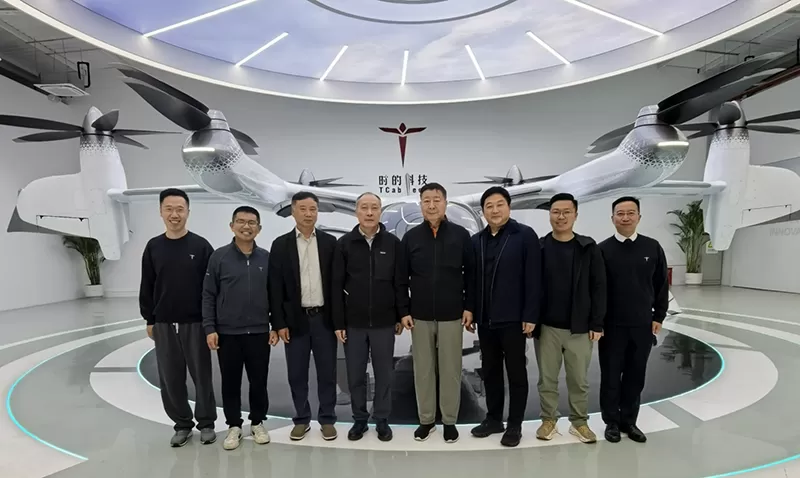
Publicly available information shows that CSS has been engaging with eVTOL manufacturers and industry participants on simulation technology and training system development. On March 19, 2026, CSS and TCab Tech signed a deepened strategic cooperation and business agreement, covering areas including simulation equipment development and support for airworthiness-related work.
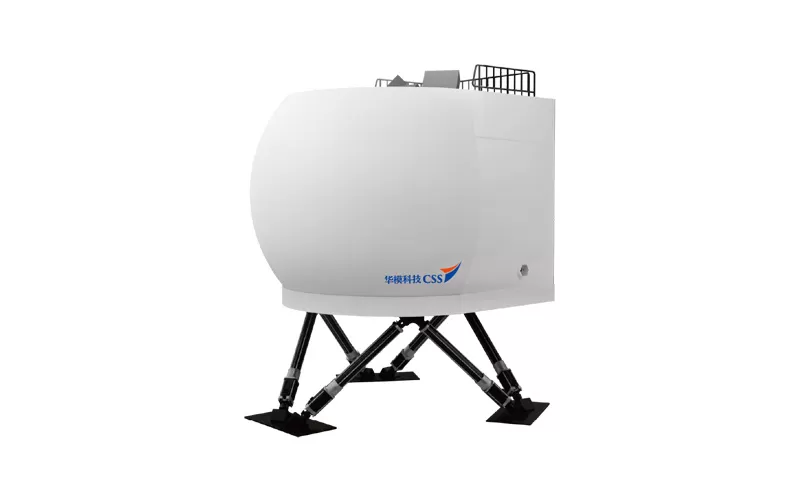
To address industry challenges such as high battery consumption during real eVTOL training flights and the cost associated with repeated take-off and landing cycles, CSS has introduced a cost-conscious, high-performance full-motion simulation solution. It provides a ground-based platform for practicing frequent flight-mode transitions and abnormal or emergency scenarios.
The transferable value of CSS's Level D civil aviation simulator project experience does not lie simply in cockpit appearance or motion platform hardware specifications. It also lies in the engineering methods used for data traceability and configuration control.
These methods help establish verifiable and traceable relationships among OEM flight-test data, flight control models, failure logic, and training tasks. At a stage when eVTOL aircraft data may still be evolving and configurations may undergo continuous updates, a standardized verification and configuration management process can provide meaningful support to aircraft manufacturers and training organizations as they develop their training and qualification pathways.
The Long-Term Value of Building an eVTOL Training Ecosystem
The large-scale operation of advanced air mobility depends on a safe and verifiable foundation for pilot training.
A simulation assessment approach based on training task capabilities, rather than relying exclusively on fixed qualification labels, may better accommodate the rapid development of eVTOL aircraft and the differences between individual aircraft configurations.
China Simulation Sciences (CSS) continues to develop simulation solutions suited to the characteristics of eVTOL aircraft, supporting the industry's efforts to establish FSTD qualification approaches and training systems that reflect the operational characteristics of electric vertical take-off and landing aircraft.
Frequently Asked Questions (FAQ)
Q1: What is the FSTD Capability Signature (FCS)?
A: The FSTD Capability Signature (FCS) is a framework introduced by EASA through its RMT.0196 regulatory initiative. It describes an FSTD's technical capabilities through defined features and associated fidelity levels, rather than relying solely on traditional fixed qualification categories. This allows training organizations and authorities to assess whether a device's capabilities are appropriate for specific training tasks.
Q2: Why may traditional fixed-wing and helicopter FSTD qualification frameworks be insufficient for eVTOL training?
A: Traditional frameworks were developed around fixed-wing aircraft and helicopters. However, eVTOL aircraft introduce distinctive flight scenarios, particularly during transitions between vertical and wing-borne flight. These include acceleration and deceleration transitions, interrupted transitions, propulsion failures during transition, and flight control law changes. Their propulsion architectures and control characteristics may require additional simulation capabilities that cannot simply be addressed by combining conventional fixed-wing and helicopter training functions.
Q3: How does the role of an eVTOL pilot differ from that of a traditional general aviation or airline pilot?
A: The specific role depends on the aircraft design and its operating concept. In many distributed electric propulsion configurations, flight control computers manage the operation of multiple propulsion units. Pilots therefore need to pay close attention to flight monitoring, system management, decision-making, and abnormal or emergency procedures, in addition to conventional flight control skills.
Q4: What is an FAA Level 7 FTD, and how does it differ from an FFS?
A: An FAA Level 7 Flight Training Device (FTD) is a qualification category for flight training devices under FAA requirements. It does not inherently require a conventional six-degree-of-freedom motion platform. Depending on the device design and applicable qualification requirements, visual and interactive technologies such as Mixed Reality (MR) may be incorporated.
A Full Flight Simulator (FFS), by comparison, is a different category of training device that provides a higher level of aircraft-system and environmental simulation, with motion cues provided by its motion system. The applicable qualification standards and training privileges depend on the specific device and regulatory framework.
Joby and Archer have both announced eVTOL simulation development projects involving Level 7 FTD-oriented training devices, although their technical configurations and qualification pathways differ.
Q5: What simulation-related support can CSS provide to eVTOL manufacturers?
A: Building on its civil aviation FSTD engineering experience, China Simulation Sciences (CSS) provides simulation-related development solutions for the eVTOL sector. These include engineering simulators, full-motion training device development, and technical support related to simulation validation and airworthiness activities. Depending on project requirements, support may also cover data traceability, configuration management, and the adaptation of flight control and failure models as aircraft configurations evolve.
Q6: What are the main technical challenges in eVTOL simulation?
A: One of the key challenges is the simulation of transition flight between different flight modes. This involves coupled aerodynamic effects, dynamic responses from electric propulsion systems, complex airflow around urban structures, and changes in flight control logic.
Another important challenge is continuous aircraft configuration development. Simulation platforms therefore need flexible data version management and efficient update processes to keep pace with changes in aircraft design and system behavior.
Q7: What advantages can capability-based thinking offer to eVTOL manufacturers and training organizations?
A: A capability-based approach helps align simulator functions and fidelity levels with specific training objectives. It may allow manufacturers and training organizations to configure devices according to actual training needs, rather than investing in hardware capabilities that are not required for a particular task.
By establishing clearer relationships among training tasks, simulator fidelity, and qualification requirements, this approach can also better accommodate differences between eVTOL aircraft models and ongoing configuration updates.