


Level D Full Flight Simulator: A Core Infrastructure for Civil Aviation Training
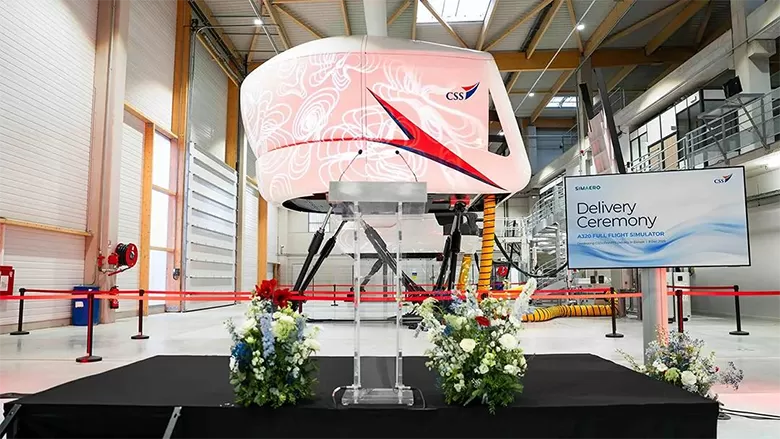
A Level D Full Flight Simulator (FFS) is far more than a piece of equipment designed to reproduce the sensory experience of an aircraft cockpit. For airlines, flight training organizations, and civil aviation authorities, a properly qualified Level D simulator provides a standardized training environment in which flight scenarios can be repeatedly practiced, performance can be objectively evaluated, and training activities can be conducted within an established regulatory framework.
As a critical part of modern aviation training infrastructure, Level D FFS technology supports the development and maintenance of pilot competencies while contributing to aviation safety and operational readiness.
China Simulation Sciences (CSS), established in 2019 under the Juneyao Group, has been focusing on the independent development and industrialization of high-level flight simulation equipment. Drawing on its aviation industry experience and engineering capabilities, CSS has established a development, manufacturing, qualification, and delivery framework covering major aircraft families from Airbus, Boeing, and COMAC.
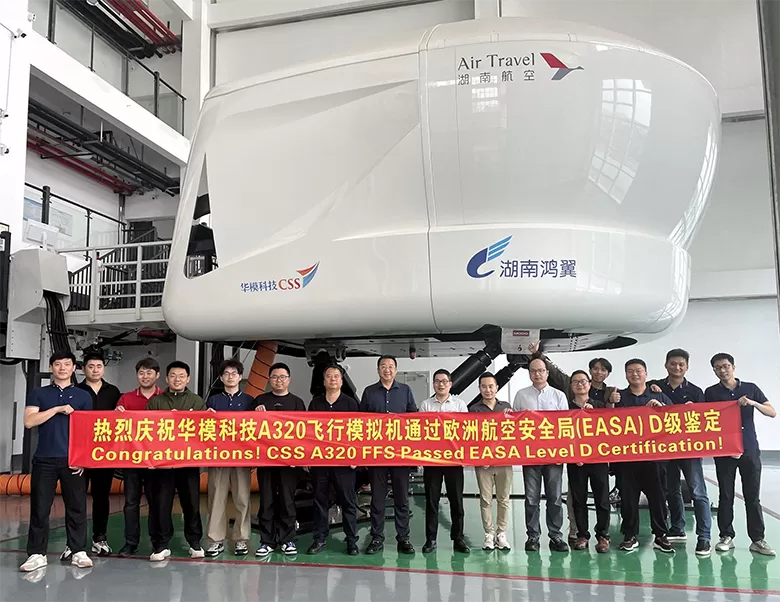
CSS has achieved several important milestones in the development of high-fidelity flight simulation equipment. These include obtaining both EASA and CAAC Level D qualifications for its relevant simulator products and developing and delivering China's first A320 NEO/CEO Level D Full Flight Simulator.
Beyond these milestones, the engineering process demonstrates the importance of an integrated development capability. It involves aircraft manufacturer flight-test data and engineering aerodynamic data, simulation model development, hardware integration, system testing, objective qualification tests, and subjective evaluation by qualified pilots.
This end-to-end process provides the technical foundation for developing and delivering high-level flight simulation equipment in accordance with applicable aviation qualification requirements.
1. Understanding Level D: The Highest FFS Qualification Level, Not a Universal Training Solution
Within the established EASA CS-FSTD(A) qualification framework, Level D represents the highest qualification level for Full Flight Simulators. It is associated with a demanding set of technical and performance requirements covering multiple interconnected simulation systems.
A Level D FFS is not qualified simply because its cockpit appearance resembles that of an actual aircraft. Its systems and simulated flight characteristics must meet the applicable qualification standards and demonstrate sufficient correlation with the aircraft being represented.
The major technical systems typically include:
Six-Degrees-of-Freedom Motion System: Reproduces representative aircraft motion cues, including acceleration and vibration effects, to support realistic flight training.
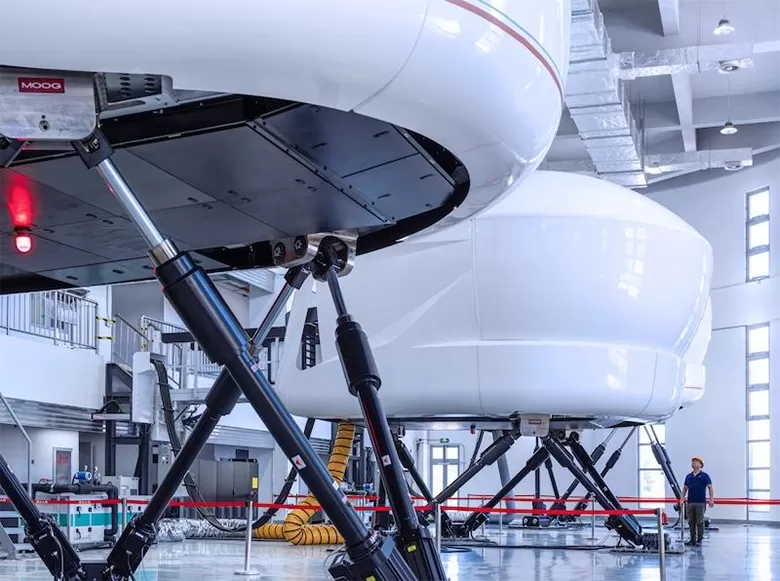
High-Fidelity Visual System: Provides a wide field of view and realistic representations of airports, runways, terrain, weather, and surrounding environments.
Sound and Environmental Simulation System: Reproduces relevant cockpit sounds, aircraft noises, and environmental audio cues.
Control Loading System: Simulates representative control forces and feedback through the flight controls.
Avionics and Aircraft Systems Simulation: Replicates relevant aircraft instruments, displays, navigation systems, and onboard system behavior.
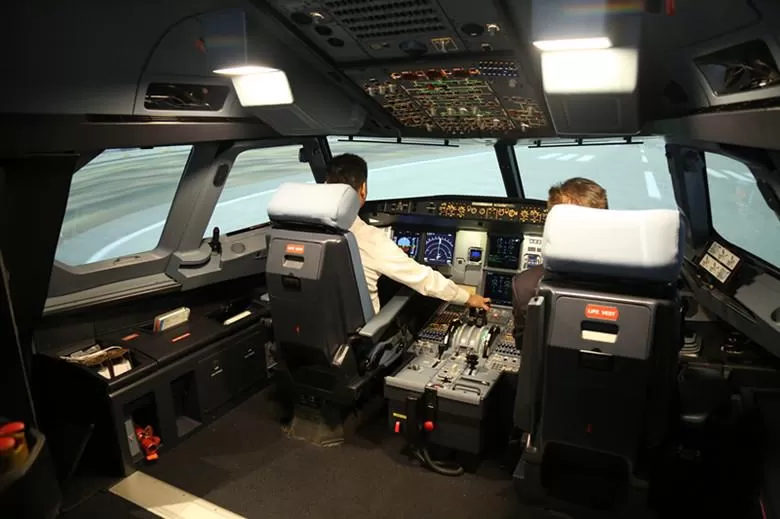
Flight Dynamics and Aerodynamic Models: Reproduce aircraft performance and handling characteristics using appropriate aircraft data and validation evidence.
The qualification process involves more than a visual inspection or a basic functional test. It includes objective tests designed to assess system performance and, where applicable, subjective evaluations that examine how closely the simulator reproduces the aircraft's handling characteristics and operational responses.
Depending on the applicable regulatory framework, qualification evidence may include aircraft manufacturer data, validation flight-test data, engineering documentation, system specifications, and test results.
The simulator must demonstrate compliance with the relevant requirements before it can receive the corresponding qualification from the competent aviation authority.
Typical Training Applications of Level D Simulators
One of the major advantages of Level D simulation is the ability to provide a controlled environment for practicing situations that may be difficult, costly, or unsafe to reproduce repeatedly during actual flight operations.
Typical training scenarios include:
| Training Scenario | Training Focus |
|---|---|
| Engine Failure | Aircraft control and operational procedures following an engine failure |
| Multiple System Failures | Managing abnormal conditions involving multiple aircraft systems |
| Windshear and Severe Weather | Recognizing environmental hazards and applying appropriate procedures |
| Engine Fire | Practicing fire detection, emergency checklists, and decision-making |
| Hydraulic or Pneumatic System Degradation | Understanding system limitations and managing abnormal configurations |
| Low-Visibility Approaches | Improving instrument approach procedures and situational awareness |
| Rejected Takeoff | Practicing decision-making and procedures during an aborted takeoff |
| Go-Around Procedures | Maintaining aircraft control and following appropriate go-around procedures |
These scenarios allow pilots to practice emergency procedures and decision-making without exposing an operational aircraft to the same training risks.
However, high-fidelity simulation also has its limitations. It should not be considered a universal replacement for every form of flight training.
Certain training objectives may require additional devices or actual aircraft experience, depending on the applicable training program and regulatory requirements. For example, specific physiological responses, sustained physical sensations, and certain real-world environmental experiences cannot necessarily be reproduced completely by a simulator.
For this reason, CSS approaches aviation simulation as part of an integrated training solution rather than positioning a single device as a substitute for every training method. Depending on the training objectives, Full Flight Simulators can work alongside Flight Training Devices (FTDs), other simulation equipment, and actual aircraft training.
2. Beyond Hardware Integration: Aircraft Compatibility and Lifecycle Supply Chain Capabilities
Full Flight Simulators are sometimes viewed primarily as complex hardware integration projects. However, the long-term engineering and supply chain capabilities behind a Level D simulator are equally important.
CSS has developed simulation compatibility capabilities covering three major commercial aircraft families: Airbus, Boeing, and COMAC. The company has also become China's first Training Device Manufacturer (TDM) to export a Full Flight Simulator.
Maintaining a simulator's technical performance and operational consistency requires continuous engineering work and coordination with aircraft manufacturers and relevant technology partners.
Key activities may include:
Coordination and management of aircraft manufacturer data packages.
Simulation software configuration and version control.
Updates to airport and visual database environments.
Calibration and optimization of six-degree-of-freedom motion systems.
Synchronization of simulated avionics configurations with relevant aircraft standards.
Updates to aircraft system models and abnormal procedure scenarios.
Technical support for equipment maintenance and qualification activities.
Each of these areas requires specialized engineering knowledge and long-term technical support.
Compatibility across different aircraft families also places additional demands on simulation architecture. A modular development approach can help support system integration, software upgrades, and configuration adjustments across different aircraft types.
Rather than treating each simulator as an isolated, one-time customization project, a sustainable development framework needs to consider future aircraft configurations, software evolution, and long-term operational requirements.
Why Lifecycle Support Matters When Selecting a Flight Simulator
For airlines and flight training organizations, simulator selection should not be based solely on the initial procurement cost.
Equipment delivery is only the beginning of its operational lifecycle. Over the following years, the simulator may require continuous updates, technical maintenance, configuration management, and recurring qualification activities.
| Lifecycle Consideration | Typical Requirements |
|---|---|
| Aircraft Data Updates | Maintaining relevant aircraft data and simulation model configurations |
| Avionics Configuration | Adapting simulated systems to applicable aircraft configuration changes |
| Visual Database Maintenance | Updating airport environments, runways, and visual scenarios |
| Motion System Maintenance | Periodic inspection, calibration, and performance verification |
| Simulation Software | Software updates, compatibility checks, and system optimization |
| Qualification Maintenance | Supporting recurrent evaluations and maintaining the applicable qualification status |
| Spare Parts and Technical Support | Managing replacement components and providing ongoing engineering assistance |
These activities can have a significant impact on long-term operating costs, simulator availability, and training continuity.
Drawing on its international partner network and accumulated aviation engineering experience, China Simulation Sciences (CSS) provides technical support and maintenance services throughout the simulator lifecycle.
Its service approach is designed to support customers' long-term training plans, fleet development requirements, equipment maintenance needs, and applicable qualification obligations.
By considering the entire lifecycle of a simulator, training organizations can make more informed decisions about equipment investment, operational planning, and long-term technical support.
3. The Long-Term Value of Level D Simulation in Aviation Safety
Aviation safety depends on a continuous and consistent pilot training system. As aircraft technologies and operational environments evolve, training equipment must also adapt to changing technical and operational requirements.
Level D Full Flight Simulators provide a controlled environment in which pilots can practice complex procedures, develop emergency response skills, and maintain operational competencies.
By transferring many high-risk training scenarios from actual aircraft operations to a ground-based simulation environment, these systems can help reduce training exposure to operational risks while improving training repeatability and consistency.
For airlines and training organizations, the value of a Level D simulator extends beyond its motion platform, visual system, or cockpit configuration. Its long-term value also depends on the accuracy of its simulation models, the stability of its software and hardware, its ability to accommodate relevant configuration changes, and the availability of continuous technical support.
China Simulation Sciences (CSS) continues to advance the development and delivery of high-level flight simulation equipment. Through its engineering capabilities, international cooperation, and lifecycle support services, CSS aims to provide airlines and flight training organizations with reliable simulation solutions that support their operational and training requirements.
As the aviation industry continues to develop, high-fidelity simulation technology will remain an important part of building standardized training capabilities and supporting long-term aviation safety.
To learn more about our flight simulation solutions or discuss your training requirements, contact the CSS team.
Frequently Asked Questions (FAQ)
Q1: What is a Level D Full Flight Simulator (FFS)?
A: Level D is the highest qualification level for Full Flight Simulators under the established EASA CS-FSTD(A) framework. A Level D FFS incorporates advanced systems such as a six-degrees-of-freedom motion platform, high-fidelity visual system, control loading system, and aircraft systems simulation. Following the required evaluation and qualification process, it may be approved for specified pilot training, testing, and checking activities in accordance with applicable regulations.
Q2: What is the main difference between a Level D FFS and a Flight Training Device (FTD)?
A: A Level D FFS is a full-flight simulator equipped with a motion system and designed to meet the applicable highest-level FFS qualification requirements. An FTD is a different category of flight simulation training device, generally used for specific aircraft systems, procedures, and training objectives. The two types of equipment serve different but complementary roles within a structured pilot training program.
Q3: Is Level D simulator qualification permanently valid?
A: No. Simulator qualification should not be regarded as permanent without ongoing compliance. Equipment configuration, software, hardware performance, and relevant aircraft data must be maintained in accordance with applicable requirements. Recurrent evaluations and other oversight activities may also be required to maintain the qualification status.
CSS provides lifecycle technical support and maintenance services to help customers address these ongoing requirements.
Q4: Can a Level D simulator cover every pilot training requirement?
A: Not necessarily. Level D simulators can support a wide range of normal, abnormal, and emergency training scenarios. However, certain training objectives may require additional devices or actual aircraft experience, depending on the relevant training program and regulatory framework.
Q5: Which aircraft families can CSS provide Full Flight Simulators for?
A: CSS's current Full Flight Simulator portfolio covers major aircraft families from Airbus and Boeing, including the A320 CEO/NEO and B737 NG/MAX. CSS also identifies compatibility and development activities involving COMAC aircraft families as part of its broader simulation capabilities. Specific aircraft types, configurations, and qualification scopes should be confirmed with CSS.
Q6: What ongoing investment is required after simulator delivery?
A: Long-term requirements may include aircraft data updates, avionics configuration adjustments, visual database updates, motion system maintenance, software upgrades, recurrent performance evaluations, spare parts, and technical support. These factors should be considered during the initial simulator selection and procurement process.
Q7: Does CSS support international simulator delivery and overseas customers?
A: Yes. CSS has delivered Full Flight Simulators to overseas customers and maintains international service capabilities. Its relevant simulator products have obtained EASA and CAAC Level D qualifications. The applicable qualification, delivery, and support arrangements depend on the specific simulator model and customer requirements.
Q8: What does TDM mean in the aviation simulation industry?
A: TDM stands for Training Device Manufacturer. The term is commonly used to describe a manufacturer involved in the development and production of flight simulation training devices. Its use should be distinguished from the formal qualification or approval status of an individual simulator, which is determined by the relevant aviation authority.