


Industry Leaders Convene to Define Flight Training Standards for Manned eVTOLs
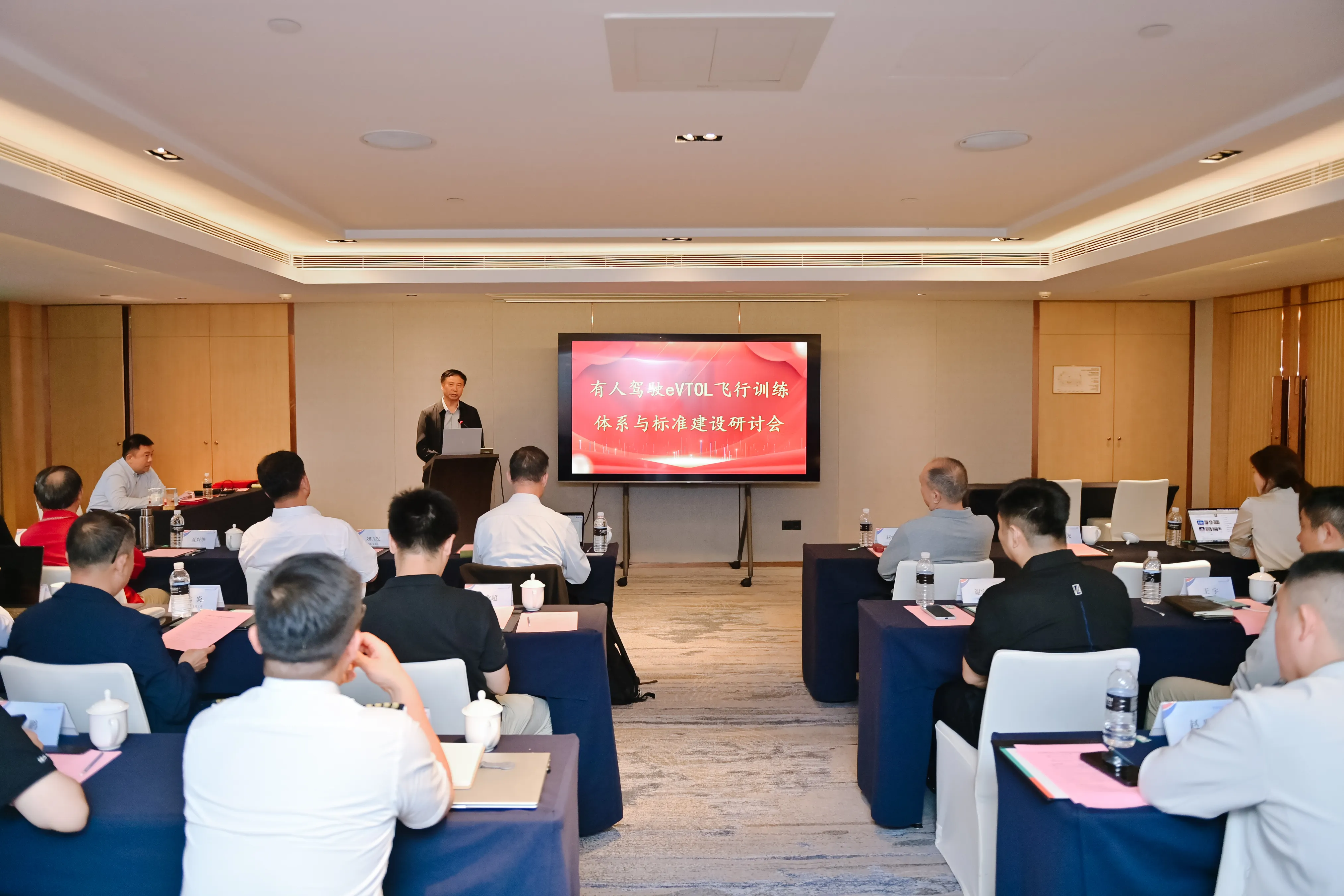
SUZHOU, May 20, 2026 —— As the global advanced air mobility (AAM) sector nears commercialization, a high-level industry seminar focused on the Manned eVTOL Flight Training System and Standardization was successfully held in Suzhou.
Hosted alongside the 14th Civil Aviation Training & Education Summit (CATES 2026), the event brought together civil aviation regulators, research institutes, eVTOL OEMs—including XPENG AeroHT, TCab Tech, Vertaxi, AutoFlight, Inflync, ZEROG, and DreamFly—and Training Device Manufacturer China Simulation Sciences (CSS), to bridge regulatory gaps and establish a global consensus on pilot cultivation and Flight Simulation Training Device (FSTD) specifications.
Redefining the Cockpit: The Rise of the "In-flight Safety Manager"
With eVTOL technology shifting toward autonomous flight and multi-source sensor fusion, the seminar proposed a landmark redefinition of the pilot’s role. Experts suggested transitioning the onboard operator's title to "In-flight Safety Manager."
Unlike traditional helicopter pilots focused on manual aerodynamic maneuvering, the core competency of an eVTOL operator will center on low-altitude traffic rules, ground-to-air coordination, and high-level emergency decision-making under automated conditions. This fresh definition anchors the future development of industry-wide training syllabi.
To address the current regulatory vacuum, the seminar prioritized two critical upcoming frameworks:
Operator Training Guidelines: Establishing grading qualifications, transition training curricula, and competency assessment metrics.
FSTD Qualification Standards: Defining simulation entry criteria with a strict focus on Human-Machine Interfaces (HMI), complex urban environment replication, and safety-critical failure simulations.
Simulation-First: Lowering Costs Without Compromising Safety
Given the high operational costs and inherent risks of live test flights for emergency scenarios, high-fidelity simulation has become the irreplaceable cornerstone of eVTOL pilot training. The seminar aligned on a tiered training equipment ecosystem, moving progressively from entry-level Flight Training Devices (FTD) up to Level D Full Flight Simulators (FFS).
China Simulation Sciences (CSS), a benchmark in the aviation simulation sector, demonstrated how its latest research directly addresses these market pain points. By integrating advanced flight control logic and complex urban low-altitude scenarios into its software architecture, CSS delivers highly adaptive, cost-effective simulation solutions. During the summit, CSS signed several strategic cooperation agreements with leading eVTOL manufacturers to co-develop integrated engineering and training platforms.
A Six-Point Roadmap for Ecosystem Development
To accelerate the construction of a robust training ecosystem, the delegation concluded with a six-point consensus:
Joint Task Force: Formed by regulators and enterprise leaders to coordinate policies and standard-setting.
Engineering Integration: Leveraging engineering simulators for early-stage airborne system validation and HMI optimization.
Cross-Scenario Validation: Normalizing multi-scenario test flights within simulated and live urban environments.
Tiered Talent Cultivation: Prioritizing the transition training of traditional General Aviation (GA) pilots before opening pathways for zero-experience candidates.
OEM-Led Pilot Programs: Supporting manufacturers in implementing initial, type-specific training syllabi.
Dual-Skill Instructors: Cultivating a new generation of instructors who bridge traditional aviation experience with intelligent avionics expertise.
About CSS
China Simulation Sciences (CSS) is a global leader in high-fidelity Flight Simulation Training Devices (FSTDs). Operating on a strategic "dual-engine" framework, CSS delivers industry-benchmark Level D Full Flight Simulators (FFS) for commercial aviation while engineering next-generation, open-architecture simulation platforms for the Advanced Air Mobility (AAM) and low-altitude economy sectors.