


Simulation Software Platforms Are Becoming the Hub of Training Management, Not Just an Add-On
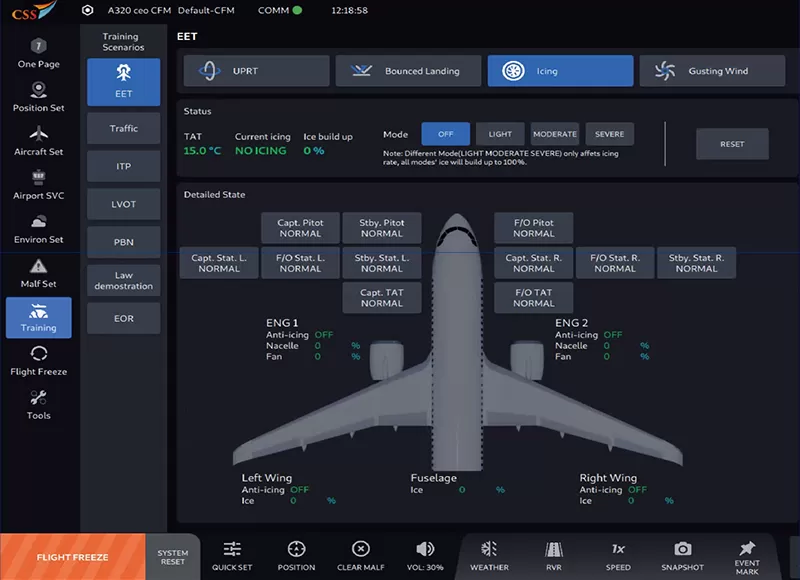
As flight training devices continue to grow in complexity, software systems supporting the management of the entire training process are evolving from supplementary simulator modules into central components of training operations.
When discussing flight simulation systems, industry attention often focuses on hardware specifications, including motion platform degrees of freedom, visual system resolution, control loading fidelity, and cockpit replication accuracy. Hardware capabilities form the foundation of simulation. However, for training organizations operating multiple FSTDs, covering different aircraft types, and managing several training programs in parallel, an integrated training management software system is an essential capability that can be easily underestimated in long-term operational and compliance management.
Within the product portfolio of China Simulation Sciences (CSS), the CSSSIM platform and simulation software stand alongside hardware-based training devices. As an independently developed software platform designed to support end-to-end training management and validation, its value can be better understood through the practical needs of training operations.
Operational Challenges: Manual Management May Work for a Single Device, but Multi-Device Operations Require Structured Data
A Level D Full Flight Simulator (FFS) continuously generates substantial amounts of operational and training data, including training task records, instructor assessment records, simulator operating logs, Qualification Test Guide (QTG) results, and configuration change histories.
For a single simulator, spreadsheets and manual records may be sufficient to support basic management. However, when a training fleet expands, multiple aircraft types are involved, and training activities are subject to ongoing regulatory oversight and review, fragmented and isolated data sources can become a significant operational bottleneck.
A deeper requirement is end-to-end traceability. During FSTD qualification, recurrent evaluation, and continuing oversight, regulatory authorities may need to review not only whether a device currently meets the applicable qualification requirements, but also whether its qualification basis has been maintained throughout its operational lifecycle.
This requires training operators to retain a complete and traceable record of relevant evidence, including objective test results, configuration change and implementation dates, instructor qualification validity, training assignments, and inspection records.
When such information is distributed across separate systems, local documents, and paper archives, the time and personnel resources required to maintain compliance can increase considerably.
The core role of this type of platform is therefore to serve as a training management layer rather than simply an add-on to simulator operating software. Its scope extends beyond flight simulation calculations to support a broader operational workflow involving personnel, training conditions, device allocation, training activities, performance assessment, and compliance documentation.
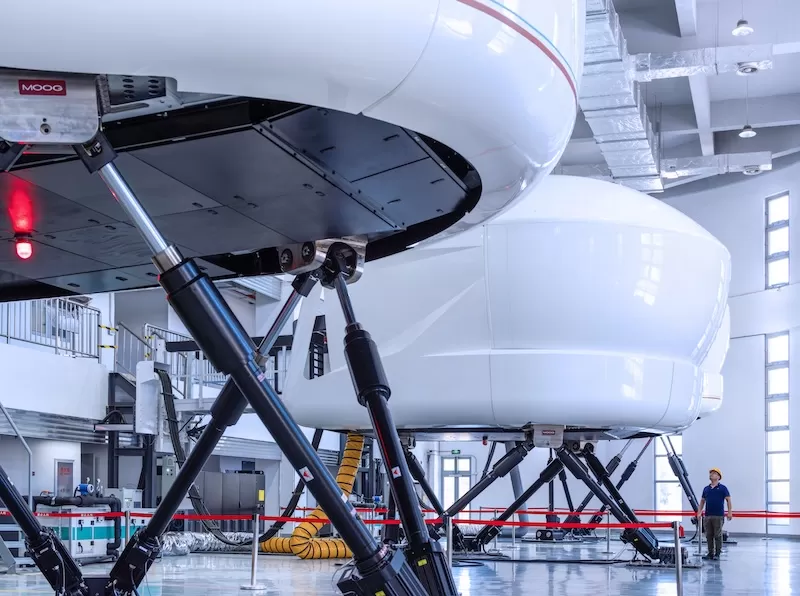
Connecting Engineering Simulation Data: Supporting Civil Aviation and eVTOL Development
Another important value of a training management platform lies in enabling connections between training simulation data and engineering model data. This is particularly relevant to the evolving eVTOL sector.
At an eVTOL training systems seminar hosted by China Simulation Sciences (CSS), flight control logic models and urban low-altitude environmental elements were discussed as part of an integrated software architecture. This highlights the importance of supporting standardized change management processes as aircraft control laws and system logic continue to evolve.
When simulation models are updated, the training environment may also need to be updated accordingly. A structured workflow can help record model changes, associated testing, review steps, and approval records, making the process more traceable and easier to review.
This is not merely a technical integration challenge. It also involves the practical implementation of configuration management procedures.
Traditional civil aviation FSTDs already have an established framework through the Qualification Test Guide (QTG). When changes affect relevant flight characteristics or simulation performance, supporting tests and evidence may be required to demonstrate continued compliance with the applicable qualification basis.
Extending this established approach to eVTOL and other emerging training scenarios requires a software infrastructure capable of supporting a structured workflow:
Change → Test → Record → Approval
Such a process can help training organizations manage model updates, validation activities, and configuration records in a more consistent manner.
Application Scenarios: Platform-Based Solutions for Scalable and Multi-Regulatory Training Operations
The value of training management software is closely related to the size and operational model of a training organization.
For a training center operating only one device with a relatively simple training program, a complex platform-based management system may introduce additional administrative overhead rather than meaningful benefits.
The primary application scenarios for such solutions are more likely to involve training providers and airline training centers operating multiple devices, managing diverse aircraft types, coordinating complex training programs, or working across different regulatory environments.
The low-altitude aviation training ecosystem is still evolving, and the scope and capabilities of simulation software platforms are developing alongside it.
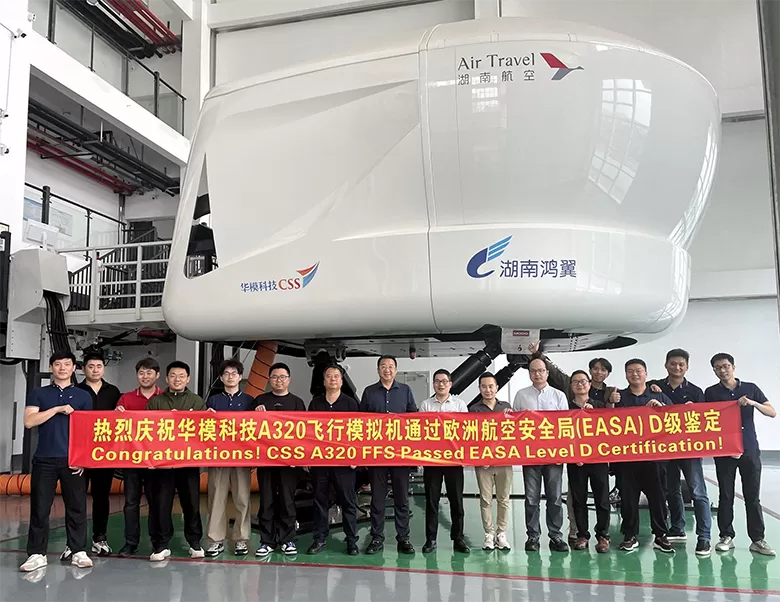
China Simulation Sciences (CSS) positions its CSSSIM platform and simulation software alongside full flight simulators and eVTOL training systems within its broader solution portfolio. This reflects an industry trend in which, as simulation devices increasingly focus on capability-based evaluation, training management processes are also moving toward more structured data management and traceability.
The relationship between simulation hardware capabilities and centralized training management software may therefore deserve greater attention than it receives in many current industry discussions.
FAQ
Q1: How is CSSSIM different from conventional simulator instructor station software?
Conventional instructor station software generally focuses on controlling a single simulator, including flight parameters, fault injection, and scenario management. CSSSIM is positioned as a simulation software and platform solution supporting training management, data processing, and validation-related applications. Its broader platform capabilities can support more structured workflows involving training data, operational information, and system-level applications, depending on the deployment scope.
Q2: Does the platform support version management for eVTOL simulation models?
Model version management is an important consideration in eVTOL simulation, particularly when aircraft control laws, electric propulsion system models, or low-altitude environmental scenarios are updated. A structured configuration management process can help track changes, testing activities, and approval records. The specific functions available depend on the implemented system and project requirements.
Q3: What role does QTG play in this system?
The Qualification Test Guide (QTG) is a key reference for FSTD qualification testing. Organizing QTG test data and associating test results with relevant simulator configurations can help operators maintain historical records, support recurrent evaluation, and facilitate reviews of qualification-related evidence.
Q4: Is this type of platform suitable for small training centers?
Platform-based training management solutions are generally more relevant to organizations operating multiple simulators, multiple aircraft types, or training programs with complex management requirements. For a small training center with a single device and a relatively straightforward program, a more lightweight management approach may be sufficient and more practical.